Category: Business Insights Series

  • Why students aren’t learning (and why it’s not the teacher’s fault)

    Why students aren’t learning (and why it’s not the teacher’s fault)

    Pablo Del Teso teaches screenwriting in universities and specialised courses, but lately, something’s changed. It’s not just the content or the curriculum, it’s the students. In this Business Insights Series interview, we dug deep into the emotional and structural challenges of modern teaching, especially in creative disciplines.

    This is our second article with Pablo. In the first, Keeping the soul in storytelling: Creativity, AI, and the human drive to connect, we explored how storytelling thrives at the intersection of emotion and craft, even in an age shaped by algorithms. Now, we zoom in on the classroom itself.

    From disengaged learners and short attention spans to university policies that don’t help, this conversation pulls no punches.

    We talked about the loss of delayed gratification, why cheating is more appealing than learning, and what it’s like trying to teach storytelling to students who can’t focus long enough to watch a film. Pablo doesn’t claim to have all the answers, but he shares raw, honest reflections from inside the classroom, and they resonate far beyond education.

    The vanishing motivation: 80% don’t care, 20% really do

    Let’s start with the obvious: motivation is tanking. Pablo was blunt about it. “Most of the students, especially in the last decade or so, I see that they are less and less motivated, they put more effort in trying to cheat than in trying to learn.”

    Academic research confirms this motivation crisis. A comprehensive study published in 2020 by the International Centre for Academic Integrity revealed that over 60% of university students admit to some form of cheating, with 13.8% confessing to word-for-word copying. As one researcher noted, “Academic dishonesty is a common problem at universities around the world,” with studies across Canada, Sweden, Australia, and Germany all reporting similar troubling trends. This isn’t just Pablo’s observation’s a documented global phenomenon.

    The issue isn’t solely student behaviour, but rather their underlying mindset. Students are not entering the classroom with a desire for learning. Many see education as an obstacle, not an opportunity. And this trend isn’t limited to film school, it reflects a growing generational shift where the learning process itself is seen as optional, tedious, or worse, irrelevant.

    This shows up in ways that are both subtle and jarring. I asked Pablo about cheating and short attention spans, and he told me: “Some of them don’t even want to watch a film. Maybe I give them Finding Nemo or Up, something entertaining. Nothing. They just don’t care.”

    Think about that. We’re not asking for academic essays or lectures. We’re talking about watching a mainstream animated film, a basic, enjoyable starting point. Still, many students refuse to engage. Not because they can’t. Because they won’t.

    The implications are staggering. If students won’t even consume the content they’re meant to learn from, how can we expect them to analyse, interpret or create? If you don’t engage the senses, you can’t stimulate the mind. And without that foundation, no framework, no matter how brilliant, can take root.

    What we’re seeing here isn’t laziness. It’s a deeper form of disengagement, one that requires a fundamental rethinking of how we connect with students in the first place.

    A culture of instant gratification, no patience for process

    Students today want results. Fast. The idea of a long, messy, rewarding journey is out of fashion. Waiting, refining, and reflecting – those are now viewed as inefficiencies, not virtues. Why toil for months perfecting a script when you can generate one in seconds or mimic someone else’s in minutes?

    Pablo pointed to a deeper issue. “They want the reward of making movies or writing scripts, but they don’t want the hassle… They lost the ability of delaying the reward.”

    And that loss isn’t trivial. Delayed gratification is a core muscle in both creativity and life success. It’s what enables someone to write a second draft, revisit a weak scene, or push through moments of self-doubt. Without it, students expect a shortcut through every challenge, and burn out or give up when it doesn’t appear.

    Young people today have really different attention spans, and it’s not just a trend. Platforms like TikTok, Instagram, and mobile games with their constant rewards are big reasons for this. It’s a real issue for teachers, who have to change how they teach to keep kids interested. It’s harder for students to focus and stick with things, which affects their learning and how they grow as people.

    All this short-form content makes them expect quick changes and instant results, so it’s tougher for them to focus deeply or solve complex problems. We need to rethink education and figure out how digital life is changing how kids pay attention.

    He said it best: “It’s not very stimulating for the teacher to make that emotional report… It’s exactly the opposite.”

    Imagine showing up week after week with passion and preparation, only to be met with silence, shortcuts, or outright indifference. If the teacher is exhausted and uninspired, how can we expect students to be the opposite? We can’t. And that’s the quiet tragedy unfolding in classrooms worldwide.

    When universities reward tuition, not learning

    Teachers want to teach. Students, often, don’t want to learn. And universities? They mostly want to avoid conflict. The result is a silent standoff where everyone involved plays it safe, except the quality of education, which quietly declines.

    Pablo put it plainly: “If the parents don’t want me to teach them anything… if the students don’t want to learn anything… and if the authorities don’t want me to have any problems with the students, what am I supposed to do?”

    This isn’t a failure of individual effort. It’s systemic. Educators are caught between institutional policies that prioritise inclusivity and customer satisfaction, and a growing student body conditioned to resist discomfort. When these two forces collide, standards give way, and those who demand more, teachers who challenge, question, and expect, are seen as the problem.

    It’s a strange inversion of responsibility. The expectation is no longer that students rise to meet the challenge but that the challenge be softened to match the students. When excellence becomes optional, mediocrity becomes policy.

    And the pressure goes beyond grades. Pablo shared that parents now regularly intervene in university-level matters: questioning low scores, blaming professors, even complaining to academic authorities as if they were still in secondary school. “In the last years I have seen parents coming to the university to talk to the authorities as if they were in a high school to complain because some teacher didn’t give them good grades.”

    What we need are policies that back educators when they uphold quality. We need leadership that views rigour as a form of respect, not punishment. But what we often get are performance reviews based on student satisfaction surveys, as if education were a product, and discomfort a defect.

    What actually works? Engagement, emotion, and earned respect

    When Pablo teaches specialised courses, where students choose to be there, everything changes. “I am especially tough with the ones that I know can go a little bit further… And I get really, really good results.”

    These are the classrooms where real learning happens. Not because the content is different, but because the mindset is. Students arrive curious, not coerced. They want to learn, to grow, to be challenged, and Pablo meets them there with high standards and real expectations. The result? A creative space where intellectual friction breeds insight.

    The magic? Engagement. Emotional connection. Storytelling as a tool, not just a subject. In this context, feedback becomes conversation. Assignments become discoveries. Students don’t just show up, they contribute.

    And it’s mutual. “They push me as well… they make questions that nobody had asked me before and I hadn’t asked myself that.”

    Teaching becomes a two-way street. The relationship becomes a form of mentorship. There’s energy in the room. Dialogue, not monologue. And the students, years later, come back to thank him, not just for what he taught, but for what he believed they could become.

    This experience has shaped Pablo’s approach. He now concentrates his efforts where they matter most. “OK, so I’m going to try to concentrate on that 20% that really want to learn.” It’s not resignation, it’s realism. A form of educational triage that preserves both his energy and the integrity of his work.

    Technology, entertainment, and the dopamine crisis

    We joked about TikTok and phone games, but the reality is serious. These platforms train the brain for surface-level consumption and fast rewards. They offer stimulation without substance, novelty without effort, and for many young people, that has become the baseline for how they interact with the world.

    Pablo said, “Most of the stimuli younger generations get don’t require them to think or solve anything.”

    And he’s right. When attention is constantly diverted, curiosity has no time to mature. When everything is delivered instantly, why develop the skills to struggle, to question, or to explore?

    That’s a problem for education, but it’s also a societal one. If students lose the capacity for deep focus, problem-solving, and critical thinking, then what future are we preparing them for? A future where no one builds, reflects, or repairs? A future of passive consumption rather than active participation?

    We explored whether teaching should adapt or resist this shift. I argued that problem-solving can still be inherently stimulating. Pablo agreed, but added: “Tell me when you use Instagram, what problems do you solve?”

    It’s a fair question. And one we need to answer with urgency, not just as educators, but as parents, leaders, creators, and citizens. If we want future generations to be capable of more than swiping and scrolling, we must teach them to stay with the hard questions, to sit with the discomfort, and to find joy not just in answers, but in the pursuit itself.

    Conclusion: Stop blaming teachers, start fixing the system

    Pablo’s experience highlights a painful truth: great teachers are no match for broken incentives and disengaged learners.

    The students haven’t failed. The teachers haven’t failed. The system has.

    What gives us hope? That 20% of students who still care. The joy of emotional connection in the classroom. The power of storytelling. The ability to reach someone, truly reach them, with a well-crafted scene, question, or challenge.

    As Pablo said, “I know that there are some principles and you can teach them and they can learn how to apply those principles or find new ways of doing what they do.”

    That’s the part we hold on to.

  • From data to impact: Rethinking ESG growth in uncertain times

    From data to impact: Rethinking ESG growth in uncertain times

    In this edition of the Business Insights Series, we sit down with Meri Podzic, CEO of As You Know, a data-driven ESG platform with roots in advocacy and a vision for sustainable change. Spun out from a 30-year-old non-profit, As You Know is now tackling one of the hardest nuts to crack in the modern business world: how to monetise ESG data fairly while still promoting equity, governance, and environmental integrity.

    Meri brings a wealth of experience from the non-profit sector, where she championed corporate accountability and shareholder activism. In addition to her advocacy work, she contributed to international development through her roles with global organisations. Now, through As You Know, she leads a mission-driven for-profit venture that licenses DEI, racial justice, and environmental data to investment firms and corporations. With a strong commitment to ethical business practices, her team operates on a 50-50 revenue-sharing model that ensures data providers benefit directly from their contributions. Based in Europe and working globally, Meri is building a collaborative ecosystem for high-quality, impactful ESG insights.

    In our conversation, Meri opens up about transitioning from the non-profit world to a commercial model, how the political climate is shaping data demand, and what it’s really like to sell DEI and ESG data in 2025. We also explore where the growth opportunities lie (think EU, Asia, and beyond)and how Serenichron’s approach to systems and strategy might help.

    Let’s get into it.

    From advocacy to monetisation: making ESG data pay off

    Meri started As You Know with a clear mission: to make critical ESG data more accessible and usable, but with a twist. Rather than sticking to a purely philanthropic model, she saw an opportunity to license data in a way that benefits both data providers and users.

    “We really want to be fair. They already have this incredible volume of data, but no clear way to use or monetise it”

    In her words, the goal isn’t just to license data, but to uplift organisations that have spent years aggregating it without a viable business model. With a 50-50 revenue share, As You Know ensures that those who generate the data are also rewarded. That’s a model built not only on fairness but also on long-term sustainability.

    What makes this model especially powerful is its inclusiveness. As You Know actively seeks partnerships with nonprofits, researchers, and mission-aligned for-profit firms that hold valuable but underutilised datasets. By offering infrastructure, revenue incentives, and technical support, Meri’s team transforms passive data assets into strategic resources for the entire ESG ecosystem.

    The team has already restructured their dashboard to cater to organisations that need storage and licensing solutions. This flexibility shows that As You Know is not just talking the talk but building the infrastructure to support a broader vision of ESG, one that is collaborative, decentralised, and future-ready.

    The politics of data: navigating the U.S. landscape

    Let’s be honest. DEI and racial justice data are in the political hot seat right now, especially in the U.S. market. Meri doesn’t sugarcoat the situation.

    “There’s noticeable caution right now, many are unsure about how to engage with DEI and racial justice data. It’s less about distancing from these values and more about navigating a period of uncertainty, adjustment, and in some cases, rebranding the way this work is framed.”

    The backlash is more than theoretical, it’s affecting funding, partnerships, and even access. In a country where legislation and public opinion swing rapidly, many institutions are opting to stay quiet rather than risk criticism or political retaliation. This shift is pushing values-driven initiatives like Meri’s into more cautious waters.

    “There’s this incoming climate… I haven’t read it in the press, but it’s coming.” Meri noted, referencing a growing undercurrent of resistance that hasn’t yet made headlines but is very much felt by those in the space.

    Amid shifting dynamics in the U.S. market, Meri is exploring new opportunities abroad. Regions like the EU and Australia are emerging as strong prospects, showing greater openness to comprehensive ESG frameworks. This move isn’t just a change in direction, it’s a deliberate, strategic realignment aimed at sustainable growth.

    And it’s not just about avoiding political pushback. There are real gaps in the quality and consistency of existing ESG data providers.

    “When I was in San Francisco meeting with investment firms and asset management first I heard concerns about the quality and reliability of some ESG data sources. There’s a real appetite for more accurate and decision-useful information.”

    The frustration isn’t isolated. As Meri highlighted, “It’s common to see major ESG data providers report significantly different figures for the same company. The lack of consistency underscores the challenges investors face in making informed decisions.” For ESG-focused decision-makers, that’s not just annoying, it’s dangerous. These discrepancies call into question the reliability of mainstream providers and open the door for As You Know to fill the gap with more rigorous, ethically sourced data.

    It’s a timely reminder that political headwinds and data inconsistency aren’t two separate problems, they’re two sides of the same coin, both pointing to the urgent need for a better, more transparent system.

    Selling the invisible: where sales meet systems

    Turning ESG data into revenue isn’t just about putting a price tag on principles; it’s about helping businesses see the direct link between sustainability and financial results. More and more companies are starting to measure real-world impacts like employee wellbeing, tracked, for instance, through absenteeism, and digitisation efforts that reduce costs and increase operational efficiency. It’s a bit like finding hidden value you didn’t realise was there, tucked away in dusty operational corners.

    By equipping clients to quantify these kinds of changes, Meri’s platform goes far beyond virtue signalling. It shows tangible value, the kind that even the most finance-focused executive can get behind. This is where ethical practice meets economic sense, and where ESG data becomes not just a report card, but a roadmap to smarter business.

    The challenges of monetising sustainability data aren’t limited to politics. Meri is clear-eyed about the early-stage growing pains. Outreach is largely word-of-mouth, and the team only recently started using HubSpot.

    “All our meetings so far have come through word of mouth and LinkedIn outreach. It really highlights both the demand for this work and the strength of trusted networks in opening doors.”

    This organic growth is admirable, but it’s also inherently limited. Word-of-mouth can validate a product’s value, but it cannot scale it. The early traction is evident: they have over 300 contacts in HubSpot, and impressively, only two people have unsubscribed from their communications.

    “We finally got around how to use HubSpot… I think only two people unsubscribed from the content we were sharing.”

    That shows clear audience alignment. But alignment alone isn’t enough without momentum.

    And yet, the ambition is clear. What Meri and her team need now is scale, and that’s where Serenichron’s systems-driven approach comes in. During our conversation, I walked Meri through a more methodical sales strategy: from enriching government databases to using multi-channel outreach (email, LinkedIn, phone, SMS), and applying 5-10 touchpoint sequences to boost engagement.

    “At 1%, that means you need to contact 400 people to book four meetings per day.”

    These are the numbers that govern outreach at scale. You can’t just rely on charm and a network. You need systems. And that means data enrichment, CRM optimisation, message sequencing, and contact triangulation.

    “We never rely on just one channel of communication or one message,” I explained. “Our common sequences are between five to ten touches, and we usually expect the positive engagement to happen only toward the end.” Instead of going overboard, just aim for a steady and predictable approach.

    Go where the people are: from cold calls to warm rooms

    But here’s a truth bomb: cold outreach alone won’t cut it for Meri’s audience. The ESG world runs on trust, credibility, and face-to-face interaction. These are not just leads; they’re stakeholders with deep-rooted values, and they want to look someone in the eye before committing to collaboration. Which is why I made the case for an event-driven growth model.

    “What you need to be doing is not booking sales calls. You need to be booking events.”

    In-person conferences, industry panels, and curated networking sessions can deliver a higher ROI for a product like Meri’s, especially when attendees are already primed to care about governance and sustainability. Events provide a platform for authentic relationship-building, something that’s increasingly rare in the age of automation.

    Imagine this: before each event, the As You Know team prepares detailed profiles on 100 to 500 key stakeholders attending, investors, corporate sustainability leads, and data officers. Meetings are booked in advance, materials are tailored, and follow-ups are instant. These aren’t just warm leads, they’re intentional conversations built around aligned missions.

    This approach turns the event circuit into a high-efficiency engagement funnel. Every handshake is an opportunity to build trust, clarify the value proposition, and accelerate sales cycles. That’s not sales. That’s strategy, and it’s the kind of strategy that builds not just a client list, but a movement.

    And this strategy is backed by what’s working in the industry. The ESG data space is growing increasingly competitive, with providers like ESG Book already serving more than 100 major clients—including Bloomberg, Nasdaq, and JP Morgan. Their standout feature? Radical transparency. ESG Book is the only major provider not affiliated with a ratings agency, allowing clients to audit every single data point. That level of trust isn’t built through email chains, it’s built face-to-face.

    In a market where trust is currency, Meri’s move toward event-focused outreach isn’t just smart, it’s essential. These interactions don’t just fill a calendar with meetings; they build confidence in a product where integrity matters more than clever branding. Because in ESG, it’s not just about who you know, it’s about who knows they can trust you.

    Building a future without fear

    Despite the challenges, Meri remains optimistic. Her vision goes beyond political cycles and startup growing pains. She believes in the power of data to inform, to shift paradigms, and to empower.

    “Data is the new oil,” she says. “The most valuable commodity in today’s economy.We want to meet as much people as we can. We want to test our dashboard.”

    This is more than just running tests on the product; it’s about seeing if we’re living up to our core values. Can a values-led, data-rich organisation survive in a climate that often feels hostile to both?

    I believe the answer is yes, with the right systems, the right partners, and the right markets.

    Grow wisely, act globally

    This conversation with Meri highlighted a key truth about doing good through business: it’s not enough to have the right values. You need the right vehicle and the right strategy to drive it.

    From tackling the inconsistencies in ESG data quality to navigating the politicisation of DEI metrics, As You Know is addressing headwinds with a bold yet pragmatic approach. Their 50-50 revenue model is not just ethical, it’s disruptive in a space where monopolies have long dictated the pace. By building partnerships with overlooked data providers and integrating them into a modern platform, Meri is showing what inclusive innovation looks like.

    Meri’s strategy demonstrates true agility, remaining actively engaged in the U.S. market while also expanding focus to ESG-aligned regions like the EU. By responding to early traction signals, such as strong email engagement, and investing in event-based outreach and a systematised sales infrastructure, she’s building a solid foundation for scalable, global growth.

    This is more than a data startup; it’s a resilience story. One that reminds us that in times of volatility, clarity of mission and flexibility in execution are your best allies.

  • Keeping the soul in storytelling: Creativity, AI, and the human drive to connect

    Keeping the soul in storytelling: Creativity, AI, and the human drive to connect

    Pablo Del Teso has written stories for Netflix. He’s taught university students how to tell theirs. He even runs a boutique consultancy for script development, working with everyone from indie directors to production houses. But if you ask him where it all started, he’ll tell you:

    “It’s a very, very long love story between me and storytelling.”

    Pablo’s journey into storytelling shows us something deeper, that real creativity starts with emotion. And that’s not just poetic fluff. Studies back it up: storytelling is one of the most effective ways to build trust and loyalty in business.

    As I read recently, “When companies share stories that tap into human emotions, such as joy, sorrow, hope, or empathy, it creates a sense of relatability and authenticity. This emotional connection fosters trust and loyalty, essential in building strong and lasting relationships.”

    Pablo’s deep emotional investment in his projects is more than just artistic expression; it’s a strategic and effective method for forging stronger connections with audiences.

    This article is part of our Serenichron Business Insights Series, where we sit down with smart people doing meaningful work in their fields. In this conversation with Pablo, we unpack what it means to stay creative in an industry pressured by algorithms, budgets, and, more recently, artificial intelligence. We talk about what drives great stories, how AI is changing the creative landscape, and why the soul still matters.

    Let’s dive in.

    A life built on a story

    Pablo didn’t fall into storytelling. He grew up with it. As a child, he would write short stories and pretend to direct imaginary films. That natural flair only deepened when he studied advertising, until he realised the selling part didn’t excite him as much as the storytelling did.

    “I started studying advertising, but then I realised that what I really liked was telling stories, so I went to film school.”

    Since then, he’s built a career writing feature films and series for global platforms. But he’s never seen storytelling as just a job. It’s a form of emotional connection. A transfer of vision. A way to help others make their inner world visible.

    “What I teach is how to write stories… helping students to make their vision come through to an audience.”

    This clarity of purpose continues to guide both his academic and screenwriting work.

    The industry behind the curtain

    Getting into the film industry, especially as a screenwriter, is notoriously difficult. Pablo is candid about it. Building strong professional relationships, leveraging referrals, and establishing trust are more effective for career advancement than simply submitting resumes.

    “If you’re a director and especially if you’re a screenwriter, it’s much more difficult because you are the one that picks up the whole process.”

    Unlike other roles in production, the screenwriter doesn’t just contribute; they initiate. No story means no production. And for producers to bet on your story, they have to believe in your voice.

    “Normally it’s you as a screenwriter… You introduce it to somebody who knows somebody in a production company.”

    It’s a process that rewards networking skills and perseverance, but Pablo’s take is refreshingly honest: the craft matters more than the connections, eventually.

    When the story isn’t yours

    Look, you won’t always be jumping for joy about every job on your plate, but even the stuff that feels kinda meh can become meaningful.  Basically, if you really put your all into it, use your talents, and connect with the people you’re working with, you can turn even the most boring task into something actually pretty cool and worthwhile.

    “My mission is to help other people share their stories. So they might not be the stories that I would share… but my passion is in storytelling.”

    This is where his consulting work through The Tale Factory comes in. He helps other writers and producers refine scripts, even those with no personal resonance. The secret? Emotional adoption.

    “I make the project my own because that is the only way that I can really work on the project.”

    Driven by a passion to connect with the emotional core of every project, whether a blockbuster for a streaming giant like Netflix or the debut film of an aspiring director fueled by a singular vision, he immerses himself in the narrative until he unearths the fundamental human element that resonates.

    This dedication to emotional authenticity allows him to transform seemingly modest, geographically specific narratives into stories with universal appeal, often resulting in unexpected global recognition and impact.

    His approach underscores the belief that even the most localised experiences can tap into shared human feelings and transcend cultural boundaries, captivating audiences worldwide.

    “We did not expect anyone else to be interested in that… and it was on the top 10 for six weeks worldwide.”

    It’s fascinating to see how authentic endeavours can achieve such remarkable success. In a landscape filled with strategising, simply staying true to your vision can lead to surprisingly impactful outcomes. This kind of success goes beyond just clever tactics; it really shows how being genuine can connect with people deeply.

    A story driven by real emotion and truth is amazing in its ability to break down barriers. When a narrative connects with shared human experiences, it bypasses geographical limits, budget constraints, and language issues. That emotional truth acts as a bridge, creating understanding across different groups and proving that heartfelt stories are the ones that truly resonate.

    Soul vs systems

    As platforms grow and budgets balloon, storytelling risks becoming a product of checklists and market research. Pablo sees it too, especially in Hollywood.

    “The artistic part is just a tiny part of the decision for the big production companies in Hollywood.”

    He distinguishes between good marketing (which supports the story) and bad marketing (which replaces it). The problem isn’t marketing itself, it’s when marketers forget the audience wants to be surprised.

    “What they don’t know is that they want to be surprised… that little portion of surprise element that you need.”

    Soul can’t be faked. And it’s that missing piece that even high-budget projects sometimes overlook.

    AI and the new frontier

    AI is shaking things up in the creative world at lightning speed. But before we start clutching our storyboards in panic, let’s reframe it. Think of AI like the world’s fastest intern, brilliant at doing the heavy lifting, but still needing guidance from someone who sees the bigger picture.

    I came across a compelling line recently: “Through AI-enhanced storytelling, businesses can craft personalised, emotionally resonant narratives at scale while maintaining the authentic human touch that audiences crave.” That’s the balance we need to strike. Use AI to scale and streamline, but never let it lead the creative process. Because at the end of the day, “the real magic of art always comes from the human touch, not just the generated output.”

    Of course, no discussion about creativity in 2025 would be complete without mentioning AI. Pablo doesn’t shy away from it. In fact, he uses it. From poster design to copy tweaks, AI has become part of his workflow.

    “Before AI, I had to hire a designer and pay quite a lot of money and wait… now I can have a very good poster in a couple of hours.”

    But he draws a line: AI can assist, but not replace, the creative vision.

    “Right now, AI can replace the operational part of the process, but still it needs somebody behind with a creative human brain to guide it.”

    That’s something I’ve seen first-hand. As someone who works closely with these tools, I’ve noticed how quickly they fall apart when you ask them to build on an idea consistently. They can draft something flashy, sure, but they can’t hold a story together with emotional logic. Not yet.

    “It does not have enough context, it hallucinates, it loses the capability of remaining consistent from a certain point.”

    And that’s exactly where the line is drawn, between coherence and chaos. What AI can fake in a flash, it still can’t sustain through the arc of a meaningful narrative. There’s a deeper fear, too. Not just about job replacement, but societal consequences.

    “Who’s going to have money to buy it, if nobody’s going to have a job to make money?”

    He’s not alone in asking. And yet, there’s a sense that AI, like any other tool, will amplify the intentions behind it. If used well, it might enhance our creativity. If used poorly, it might dull the very thing that makes us human.

    Conclusion: Humans still matter

    Pablo’s story is one of passion, practice, and perspective. It’s a reminder that storytelling isn’t just about structure or visuals, it’s about soul. And while the tools may change, the need for emotional connection remains the same.

    The question for all of us, entrepreneurs, educators, creatives, is not “Will AI replace us?” but “What will we still do better than anything else?” If the answer involves emotion, connection, and meaning… we’re probably on the right track.

  • Quiet power, aligned purpose: The introvert’s path to impact

    Quiet power, aligned purpose: The introvert’s path to impact

    Patience Ogunbona is a powerhouse of inspiration and quiet confidence. In a wide-ranging conversation for the Serenichron Business Insights Series, she shared her journey of embracing her introverted nature and turning it into a superpower.

    Patience helps introverted women discover their unique strengths, overcome societal pressures, and thrive in leadership and business. As a leadership coach and creator of The Aligned Introvert Method, she combines deep personal insight with practical tools that empower others to step into their full potential.

    In this article, we dive into her framework, her systems, and her views on AI, identity, and holistic success. It’s a conversation that speaks not just to introverted women but to anyone seeking to build a life and business aligned with their core.

    The year the world went quiet

    As the world slowed down, Patience found herself at a crossroads. She was drained, disheartened, and ready to walk away from her business altogether. But during that stillness, something powerful happened. Her coach “recognising a spark that hadn’t yet gone out” refused to let her quit.

    What followed was a deep dive into self-awareness and reconnection, Patience began to look inward, questioning not just her business tactics but her identity and story. That reflection uncovered a vital truth: her power wasn’t in following other people’s strategies. It was on her own.

    “I’m trying to bring all the strategies that other people use. But the strategies I have used have come from me trying to overcome the challenges and barriers that come with being an introvert.”

    At that moment, the missing puzzle piece clicked into place. She realised she wasn’t broken, she was built differently. And by honouring that, she could lead others to do the same.

    That clarity led to the birth of the Aligned Introvert Method, built on four pillars: identity, idea, intention, and impact. It was more than a framework. It was a reclamation of self.

    Identity before strategy

    One of the strongest messages from Patience is that transformation begins from within. Her coaching approach always starts with identity because without a strong sense of self, everything else becomes surface-level.

    “If you’re not in alignment with who you are at the core, everything else falls apart.”

    This isn’t just advice she gives others, it’s lived experience. After two decades navigating corporate life as an introvert, Patience saw how trying to blend in or perform like an extrovert drained her energy and blurred her clarity. Burnout wasn’t just a risk, it was a reality. The antidote? Rediscovering and realigning with her core identity.

    She now helps her clients do the same: dig deep, uncover the values that drive them, and build outward from there. It’s not about putting on a new mask, it’s about taking off the ones that no longer fit.

    That resonated deeply with me. “I gave a public speech at a technological conference… I signed up as a speaker for an almost one-hour spot without ever having done any kind of speaking.” It pushed me far outside my comfort zone. But in doing so, I found out what Patience already knew, introversion and confidence aren’t opposites. They grow side by side when you’re rooted in who you are.

    How introverts thrive in a noisy world

    More and more, we’re seeing both research and real-world stories bust the old myth that introverts can’t lead or create impact. In fact, their unique strengths,like deep thinking, active listening, and reflective decision-making, can shift the way organisations operate from the inside out.

    Patience reframes introversion not as a limitation, but as a wiring, one that needs understanding, not fixing.

    “An apple does not change being an apple. You can make juice, pie, or cider, but at the core, it’s still an apple. Understanding your core is important.”

    Many introverts grow up being encouraged, or even pressured, to be louder, more social, more visible. But this push to perform often backfires.

    “If introverted parents bring up an introverted child, it actually sometimes makes it worse… because they don’t encourage you to push yourself if they’re not pushing themselves.”

    Instead of abandoning their comfort zone, Patience encourages clients to expand it.

    “You’ve expanded your comfort zone, not left it. The law of expansion says the more you stretch it, the more capacity you build.”

    Raised in a household with two contrasting energies, her extroverted mother and introverted father, Patience learned the value of both social energy and solitude. That balance now shows up in how she teaches confidence.

    Lessons from the well: building trust through systems

    Many introverts struggle with visibility and sales. Patience tackles this by building systems that nurture connection while respecting energy levels.

    “People would come to my website and say, ‘I love your pictures’, but nothing happened. I thought, I don’t care about the pictures. I want this website to work for me.”

    She restructured her online presence, launched a membership platform, and created low-friction entry points into her coaching ecosystem. The result? A sustainable business model grounded in authenticity.

    And she uses a powerful metaphor to explain it:

    “Instead of going to the well, create the pipe to the centre of the village.”

    In other words, don’t exhaust yourself chasing opportunities, build a system that delivers them. This mix of nurturing and structure is key for entrepreneurs who don’t want to rely on aggressive sales tactics.

    “I’ve got the model that I want now. People take baby steps and build trust along the way. There’s a funnel, a system, but it’s also aligned with who I am.”

    Introverts naturally excel in roles that call for thorough analysis, risk awareness, and thoughtful planning. They’re often the ones who see what others miss, spotting red flags early, anticipating what could go wrong, and quietly setting up the safety nets that make success more likely.

    AI as a partner, not a threat

    Technology has quietly become a secret weapon for introverts. Nearly half say it helps level the playing field, allowing them to show up, lead, and grow without changing who they are.

    Rather than pushing them into draining activities, AI gives introverts the space to do what they do best: create, build, think deeply, and lead with intention—not noise.

    We both agreed: AI is not the enemy, it’s an amplifier.

    “Thank God for AI. It’s about knowing you can’t do it all by yourself. Having a team is not a luxury. It’s a necessity, especially for introverts.”

    Far from replacing humans, Patience sees AI as a tool that allows professionals to do better, more focused work. From automating admin to repurposing content, AI has allowed her to expand her business without burnout.

    She echoes a quote from marketing expert Seth Godin:

    “AI will replace mediocrity. But if you are excellent at what you do, AI will enhance your capabilities.”

    And I couldn’t agree more. “It is now possible for a non-specialist to do specialist-level things that were previously just the purview of the specialist.” That reality changes the game for entrepreneurs and business owners.

    We’re now entering a time where “I am empowered to do things I was not able to do, and before, it was simply impossible.” AI has become the lever that turns ideas into action, especially when time, budget, and team size are limited.

    Faith, freedom, and family

    Beyond frameworks and technology, what anchors Patience is her values. They’re not just words on paper, they are her internal compass, guiding how she works, leads, and shows up every day.

    “My core values are faith, freedom, and family. And I’ve learned in the journey of alignment to align with those. If any of those are out of place, I ask myself: ‘Are you meant to be here?’”

    Faith reminds her to act with purpose. Freedom drives her desire for autonomy and space to think and grow. Family keeps her grounded and reminds her that relationships matter more than results.

    She believes true success is measured by how well your inner life supports your outer impact. And when things get tough, she leans into one of her favourite mantras:

    “All challenges are chances for change.”

    It’s a mindset that transforms obstacles into stepping stones. Her philosophy doesn’t stop at personal growth, it stretches into how she builds her business, leads others, and thinks about leadership.

    “Holistic success is not just about me. It’s about the world. It’s about the people around me.”

    For Patience, leadership means stewardship. It’s about taking care—of yourself, your mission, your community, and doing it with integrity and compassion. That’s the kind of legacy she’s building.

    Leading into the future: moonshot mindsets

    As she looks ahead, Patience is focused on scaling, strategically and sustainably.

    “When you have moonshot goals, you can’t achieve them alone.”

    Those moonshot goals aren’t just about business growth, they’re about creating a ripple effect of transformation for the women she serves. To achieve that, Patience is building more than a team. She’s crafting a community, a purpose-led engine that reflects her values and sustains the mission beyond her own capacity.

    “I want people to grow around me. I don’t want deadweight. I love growth.”

    That means finding people who don’t just match her energy but elevate it, people who share the vision and are committed to learning, evolving, and contributing meaningfully. She’s investing in infrastructure, systems, and leadership capacity, not just operations.

    This new chapter is about more than delegation, it’s about multiplication. With a clear framework, a powerful mission, and technology as an ally, she’s building the kind of business that sustains both impact and integrity, and creates room for others to thrive within it.

    Conclusion: Aligned ambition is sustainable power

    Patience Ogunbona reminds us that leadership doesn’t need to be loud. That introversion is not a weakness. That alignment is not a luxury, it’s a necessity.

    The Aligned Introvert Method offers not just a roadmap, but a philosophy: success built on identity, values, and quiet power. And in a world full of noise, perhaps it’s time we listen more to the voices like Patience’s, steady, thoughtful, transformative.

  • Why companies ignore first-time managers (and what it costs them)

    Why companies ignore first-time managers (and what it costs them)

    Every so often, a conversation opens your eyes to something you hadn’t fully seen before. That’s exactly what happened when I spoke with Marelys L Garcia, co-founder of Mindslines, a company focused on helping a forgotten group in many businesses: first-time managers.

    Now, these aren’t executives or seasoned leaders. These are the people recently promoted, often high performers in their previous roles, now suddenly responsible for guiding teams, giving feedback, and shaping culture, all without any formal preparation. And this is where Marelys and her team step in.

    “We focus on emergent leadership or first-time managers… They haven’t had a lot of experience. So we call them tomorrow’s leaders today because… you should invest in future leadership early on, so you create the right culture, the right habits.”

    This philosophy struck a chord with me. Because when companies treat new managers like they’ll figure it out on their own, what they’re really doing is building culture by accident, not by design. And the long-term costs? They add up quickly.

    In fact, managers have been called “corporate America’s most neglected employees.” And the numbers tell the same story. Only 28% of companies prioritise developing their managers, and almost half receive less than two hours of training in total. Even more alarming, many don’t receive any meaningful development until they’ve been in leadership roles for nearly a decade. By then, the damage—burnout, miscommunication, disengagement—is often already done.

    That idea really stuck with me. Because if we treat new managers like an afterthought, we end up shaping our culture by accident, not intention. And that’s a risk no growing business can afford to take.

    Why first-time managers matter more than you think

    New managers are often dropped into leadership roles with little more than a title change. They’re still individual contributors, but now they’re also supposed to give feedback, resolve conflict, and rally a team.

    The irony? These early leadership roles touch more people than upper management ever will.

    “Most companies just aren’t structured, or sometimes even interested in investing in first-time managers. But now we’re finally seeing clients take steps to build something specifically for that layer. It’s the first time we’ve seen that shift happen inside a company.”

    And the knock-on effects? They’re not just anecdotal, they’re measurable. In the UK alone, a whopping 82% of managers start their roles with zero formal training. We call them “accidental managers”—folks promoted for being great at their job, not necessarily for being great with people. Unsurprisingly, around 60% of them stumble in those first two years. Why? Because leading people is an entirely different game, and without training, most are left guessing through conflict, feedback, and team dynamics.

    Even companies that do invest in training tend to miss the mark. As Marelys told me:

    “When I was first made manager… the focus of management school wasn’t to tell me how to deal with conflict or how to give feedback… It was about how to deal with the applications that I never used before… I learned nothing about managing people.”

    That quote stopped me in my tracks. It says a lot about how training is often more about compliance than capability. It also explains why so many new managers feel completely unprepared the moment they step into leadership.

    The challenge: Selling a product most don’t realize they need

    Mindslines has developed both structured and custom programmes aimed squarely at this under-supported layer of first-time managers. Their challenge, however, is both widespread and frustratingly persistent: most companies don’t fully grasp how critical this leadership layer is until they experience significant pain, whether it’s soaring turnover rates, disengaged teams, or costly promotion failures.

    “A lot of times what ends up happening is these companies say, ‘Yeah, I want leadership development,’ but it’s a mixed bag of people… not necessarily first-time leaders.”

    This insight from Marelys underscores a broader issue: companies often lack a clear internal strategy for supporting new managers. They may throw together a training initiative with middle managers and seasoned leaders, but miss the ones who truly need tailored guidance. As a result, Mindslines is constantly adapting, shifting gears, recalibrating their curriculum, and reworking delivery to meet the actual people in the room.

    In response to this, they’re building a smart, data-driven tool called Ascend. It’s not just a training app, it’s an assessment-based platform that tracks how managers grow over time, measuring knowledge acquisition, practical application, and crucially, self-confidence.

    “We measure knowledge, we measure application, and we measure confidence… Because if you’re not confident, you won’t go and do something.”

    That final metric, confidence, is a powerful differentiator. Because knowing how to lead and believing you can lead are two very different things. Ascend aims to bridge that gap, turning abstract development into something tangible and measurable.

    The bottleneck: Sales and marketing

    What struck me most was this: Mindslines has survived (and grown) through sheer persistence and passion. But Marelys was incredibly transparent about what they don’t have yet—a consistent sales engine. Despite their robust programmes and a highly relevant product, the operational heart of business development—prospecting, pipeline building, and closing sales—remains mostly external.

    “We are outsourcing a part of a core of any business… We never had it to begin with and we cannot buy it on a permanent basis to be our own, at least not yet.”

    It’s a tricky paradox: they’re delivering exceptional value, but they lack the infrastructure to consistently tell that story to the right people. Without an internalised marketing and sales system, Mindslines is caught in a cycle of reactive outreach and opportunity-based growth. That’s not sustainable when trying to scale.

    They’re not alone in this. Many founder-led companies hit this same bottleneck. The founders are often the best salespeople because they carry the passion and the product knowledge, but they’re also the busiest people in the business. So when sales is something you do “when there’s time,” it never really gets the momentum it needs.

    That resonated deeply. Because in my work at Serenichron, we help companies build internal systems for prospecting, marketing, and sales. Systems that don’t just scale lead generation but also protect founder time and reduce randomness in revenue. What I saw in Mindslines wasn’t a lack of value. It was a mismatch between a powerful offering and the systems to consistently deliver it to the right people—week in, week out.

    The good news? This is a solvable problem. But it starts with recognising that sales isn’t a side task, it’s the backbone of growth.

    What’s next: Human-first systems with a tech twist

    After listening to Marelys describe how they operate, with a tiny core team and a web of trusted contractors, it clicked for me:

    “You are the core. It is sort of the irreplaceable core, and then almost everything else has been plugged in as an externalized service… You retain that knowledge within your systems, your knowledge base, your prompts.”

    This approach isn’t just clever, it’s resilient. Mindslines has crafted a modular business model that scales through collaboration, not bloated headcount. With just three co-founders at its heart, each bringing a different but complementary strength, they’ve turned their limitations into leverage. One partner brings the psychology expertise, another brings HR and organisational insight, and Marelys herself draws on decades of experience in engineering and operations. Together, they’ve built a dynamic system where core knowledge stays central while delivery flexes to fit.

    They’ve managed to create a powerful hybrid: deeply human-centred learning, powered by AI-backed measurement, and delivered through scalable partnerships. Whether it’s coaching, content creation, psychometrics, or LMS delivery, they bring in specialists who slot into the system without breaking it.

    This decentralised structure allows them to stay lean, focused, and agile, yet highly effective. It also means they can respond quickly to client needs and market shifts without dragging a giant team behind them. In today’s business climate, that kind of flexibility is more than a perk, it’s a survival strategy.

    So if you’re in a company that’s struggling with retention, team morale, or unclear leadership paths, I’d start by asking: how are we supporting our first-time managers? Because the cost of ignoring them shows up in every metric that matters.

    Final thoughts: A quiet crisis worth solving

    What this conversation with Marelys made clear is that the first layer of leadership is both underserved and misunderstood. These new managers are asked to lead without tools, juggle dual roles, and build culture with little support. Yet they’re the ones who interact most with the rest of the organization, the ones who shape whether people stay or leave.

    We also saw how even great companies often don’t have the structure, budget, or awareness to invest at this level. And without systems to track impact, even well-meaning programs risk becoming “training theater.”

    But there’s a way forward. With platforms like Ascend, personalized development paths, and smarter systems for marketing and sales, companies like Mindslines are showing that leadership development can be both deeply human and measurably effective.

    This isn’t just a story about training. It’s a reminder that your future leaders are already here. The question is whether you’re giving them a fighting chance to thrive.

    Because if your first-time managers aren’t set up for success, neither are your teams. And if your teams aren’t thriving, your culture, retention, and results will suffer, quietly at first, and then all at once.

  • How one former caregiver became a UK healthcare business powerhouse

    How one former caregiver became a UK healthcare business powerhouse

    This article is part of the Serenichron Business Insights Series, where we unpack what’s working, what’s not, and where things are headed for real-world business leaders.

    Today’s story follows Attila Szelei, a former care assistant in the private healthcare sector who didn’t just leave the system, he built an alternative to it.

    After spending a decade on the frontlines, he went on to create not one, but eight businesses that support nurses and caregivers who are ready to leave behind burnout and red tape. His leading platform, agencycarestaff.co.uk, serves as a hub for healthcare professionals seeking to start their own businesses and take control of their careers.

    His work highlights just how deep the cracks run in UK healthcare: over 40% of medical staff suffer from burnout, and top-down reforms like the 2012 Health and Social Care Act have only added to the mess.

    But Attila didn’t stop at escape. He built a ladder for others to climb with him. And that ladder? 

    What started as a survival move quickly evolved into a niche empire. 

    This is the story of how Attila built a healthcare start-up engine, the cracks he’s seeing in the market, and the digital challenges that every founder will eventually face.

    It’s not easy. Around 25% of self-employed professionals in the UK don’t have health insurance. Over half of outsourced tech projects get delayed. Yet, through smart SEO, relentless learning, and community-focused growth, Attila has built a real blueprint for healthcare professionals who want to take back control—and do it on their own terms.

    Let’s dive in.

    From hospital corridors to company headquarters

    Attila didn’t always plan to be an entrepreneur. 

    His entry into business came after a decade of working in the UK healthcare system, rising to a national role with significant responsibility.

    “I started out as a care assistant, and I stayed in that business for about 10 years. I ended up at head office level with a national role, loads of responsibilities, but I got stuck in the corporate rat race.”

    Like many professionals burned out by bureaucracy, Attila looked for a way out. 

    He started a few side ventures, and soon realised they could become more than just distractions. 

    Over time, his company became a lifeline for others wanting to leave the healthcare system and go independent.

    “We became a one-stop company for anyone wanting to start a healthcare business in the UK, and then take it to the next level.”

    This wasn’t just about business. It was personal. Many of his clients shared his story—nurses frustrated by endless regulation and poor working conditions. 

    He offered them a path forward.

    Dominating the healthcare niche

    Attila’s success lies in hyper-focus. We explored the power of this kind of focused drive in a recent article on how hyperfocus and dopamine loops fuel entrepreneurial success—especially among people wired for intense engagement.

    Instead of chasing every opportunity, he zeroed in on a specific, underserved market: healthcare professionals looking to become business owners. 

    His edge? Deep domain expertise.

    “Most of our clients are nurses or healthcare workers. They’re fed up with the system. The UK is probably the most regulated healthcare system in the world. So they come to us and say, ‘I want to start my own business.’”

    What started as a narrow niche became a strategic advantage. 

    With real-life experience and a growing client base, Attila positioned his business as the go-to platform for starting and scaling healthcare ventures.

    “We now have around 300 businesses in our portfolio. Some come and go, but many stay with us for other services once they’re up and running.”

    This tells us a lot about retention and lifetime value. It’s not just about launching businesses—it’s about supporting them for the long haul.

    SEO mastery and inbound dominance

    Unlike many service businesses that rely on outbound sales or cold outreach, Attila’s team invested heavily in organic search. It paid off.

    “Type anything like ‘start a care business in the UK’ into Google, and you’ll find us. We’re right there on the first page.”

    That SEO dominance didn’t happen by accident. Attila built online visibility through persistent effort, niche content, and smart positioning.

    “We were among the first in this space. Back in 2019, we were fully booked six months in advance. Clients would pay half upfront just to secure a slot.”

    Today, the space is more crowded. The number of competitors has grown, and so has the challenge of standing out.

    Tech troubles and digital growing pains

    Despite his success, Attila has faced challenges in scaling digitally. His first experiments with automation were limited, and outsourcing software development turned out to be frustratingly slow.

    “We started using Zapier about six months ago to automate lead generation. That’s pretty much it. Everything else is still manual.”

    It’s a telling sign of how limited their digital infrastructure still is. Even small wins in automation make a difference—but there’s clearly room to grow. That makes the next challenge even more obvious.

    “We work with a developer in Turkey and a team in Pakistan. It’s more affordable for us. But one of our SaaS projects is still not finished after a year and a half.”

    Scaling a business digitally is never straightforward, and for Attila, it’s come with its fair share of headaches. 

    “We work with a developer in Turkey and a team in Pakistan. It’s more affordable for us. But one of our SaaS projects is still not finished after a year and a half.” 

    That 18-month delay isn’t rare—in fact, 52% of outsourced tech projects end up either over budget or running behind schedule

    And when you’re a founder who taught yourself WordPress and coding basics from scratch, the temptation to do it all yourself is strong. 

    But as Attila put it, “Solo founders wear too many hats,” and that’s not just a hunch—it matches the data, with 19% of tech projects failing outright

    It’s clear that his resourcefulness got him started, but now it’s becoming a bottleneck.

    Attila’s DIY roots are still visible. He taught himself WordPress, coding basics, and digital marketing by pulling all-nighters and absorbing content like a sponge.

    “I gave myself a year to learn. I slept four hours a night, spent the rest studying WordPress, marketing, business. Built a business directory from scratch.”

    This hands-on approach helped him launch, but it also created a ceiling. 

    Attila now struggles with the limits of being the sole decision-maker on tech.

    This is something I’ve seen time and again—solo founders wearing too many hats (and am still massively guilty of myself). 

    It works until it doesn’t. 

    That’s where systems and scalable thinking have to step in.

    This insight reflects what many founders are quietly battling: the exhaustion of doing everything alone. 

    It’s not just a matter of effort—it’s about designing smarter, repeatable processes that don’t rely solely on you.

    Delegation, capacity, and the bottleneck effect

    Even with a team of 8 to 10 people across all ventures, Attila remains the key contact for every new client. That makes scale hard.

    “Everyone wants to talk to me. I’m the face of the business. Once they trust me, I assign them to sub-teams, but I have to close the deal first.”

    Delegation is a known issue. Finding the right people and training them to deliver at his standards remains one of the hardest parts of his journey.

    “It’s hard to find the right people. Not everyone has the skills to do this work well. That slows us down.”

    Even though they aren’t as booked out as in 2019, the demand is still there. But converting leads remains manual, time-consuming, and highly personal.

    “The founder bottleneck is real—and dangerous. If every sale goes through you, your business can’t grow beyond your energy levels.”, I said.

    And this is a message we need to keep hammering home—especially to those building service-based businesses. Delegation isn’t just an operational decision; it’s a survival strategy.

    Competition, partnerships, and the path ahead

    The healthcare start-up space in the UK has exploded—and so has the competition. That has forced Attila to get strategic.

    “There used to be maybe 500 clients. Now there are 50, and we’re all fighting over them. Everyone’s doing what we do now.”

    He’s been approached by bigger companies wanting to buy him out—some with tempting offers. So far, he’s said no.

    “We had offers from companies that wanted to buy all eight of our businesses. I said no. Maybe I should’ve said yes.”

    Instead of selling, he focused on partnerships. Their network of referral schemes brings in extra revenue and expands their reach without adding much overhead.

    “We get bonuses every month from other businesses. If a client needs a service we don’t offer, we refer them and get paid for it.”

    In other words, Attila is building an ecosystem—not just a company.

    Final thoughts: Disrupting from within

    Attila’s journey shows what happens when grit meets niche clarity. He didn’t just escape the healthcare system. He built a business that helps others do the same.

    “Everything happened naturally. I didn’t know how to do anything else when I left the corporate world, so I started learning. From one thing came another.”

    His story is a blueprint for founders stuck in outdated systems: start small, learn fast, serve deeply, and grow through real relationships.

    Whether it’s through automation, SEO, or partnerships, Attila is proof that industry disruption doesn’t always come from the top down. Sometimes, it starts on the night shift of a care home.

  • Pushing forward through the fog: From awareness to action

    Pushing forward through the fog: From awareness to action

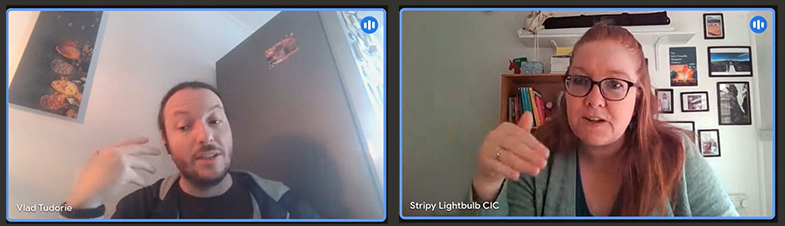
    When it comes to meaningful change, some people talk—and others build. Sally Callow MSc is a builder. With Stripy Lightbulb CIC, she’s created a digital training platform that equips professionals with essential knowledge about ME/CFS, a condition affecting well over 250,000 people in the UK. But her work doesn’t stop at education. From digital automation to national advocacy, Sally’s approach is both strategic and deeply personal. What started as a grassroots fundraising campaign has grown into a multi-layered effort to challenge outdated policies, close systemic gaps, and make life better for those too often left behind.

    When I sat down (virtually) with Sally from Stripy Lightbulb CIC, I expected a conversation about social enterprise and digital training. What I got was a lesson in resilience, vision, and how necessity drives innovation.

    Sally has lived with ME (Myalgic Encephalomyelitis) for 19 years. She doesn’t just advocate for awareness—she builds systems that fill massive gaps left by the institutions meant to protect vulnerable people. Her two initiatives, ME Foggy Dog and Stripy Lightbulb CIC, operate at the crossroads of chronic illness, education, and systemic change.

    Building from lived experience

    Stripy Lightbulb CIC officially launched in 2019 as an online training platform designed to educate healthcare professionals, teachers, and employers about ME/CFS. It was born out of a clear need Sally had seen for years through her first project, ME Foggy Dog.

    “ME Foggy Dog was launched simply as a fundraiser back in 2014… it kind of grew a bit bigger than just a fundraiser, it became a brand,” she told me. But when it came time to formalise education efforts, business advisors pointed out the disconnect between a whimsical name and a serious training platform. Thus, Stripy Lightbulb was born—a name with deep metaphorical meaning. A lightbulb is a metaphor for education and living with M.E is like living in a cage. Imagine looking at that lightbulb from within the cage-It would be stripy – Stripy Lightbulb.

    The two identities now coexist, but not without friction. “Sometimes I have to literally flick a switch in my head and just go from one to the other,” she admitted, describing the cognitive shift required to manage both voices—one informal and community-facing, the other formal and policy-driven.

    Automating to survive, not scale

    From the start, Sally knew she couldn’t run a traditional business. Her illness limits her energy severely. So she turned to automation not as a trendy business move, but as a necessity.

    “The actual online learning platform that we use is the best decision I ever made,” she said. She uses LearnDash with WordPress, chosen for its simplicity and flexibility. And while she occasionally uses AI tools like Otter.ai and ChatGPT, most of her campaigns and communications still require her hands-on involvement—especially the sensitive advocacy work.

    AI also plays a crucial supporting role when Sally faces cognitive dysfunction-a symptom affecting ME/CFS patients  to varying degrees. “With ME, I’ve got cognitive dysfunction… so if I give AI an idea and say write a blog about this, it gives me the nudge in the right direction,” she said. It’s not about outsourcing thinking, but about enabling it. This is a detail that’s often misunderstood by detractors of generative AI that argue one should be writing everything themselves.

    That work, by the way, is far-reaching. From campaigning for safer ME treatment standards to lobbying for harm reporting systems equivalent to the MHRA’s Yellow Card scheme, Sally’s advocacy bridges the gap between patient experience and institutional reform.

    Taking on systemic neglect

    When we talked about public health policy, things got heavy. ME treatment in the UK has been plagued by controversy, especially around the now-rejected recommendations of graded exercise therapy (GET)  and cognitive behavioural therapy (CBT) – approaches discredited by NICE guidelines in 2021. Sally has been leading the charge against this, pushing for legal recognition of the harm caused by the previous guideline, which was pushed through despite not being supported by the wider available research.

    “Since November 2021, I’ve been campaigning for kind of an equivalent to the yellow card system… I personally believe that the lack of a reporting system to report harm from non-pharmaceutical treatments is just disgusting.”

    Despite gathering nearly 10,000 petition signatures and support from several MPs, her campaign has hit walls of silence at the top. “The government’s not making informed decisions about the treatments that they’re offering because they don’t have any data.”

    She also touched on the discredited PACE trial, calling it one of the biggest medical scandals of the 21st century. The trial, co-funded by government and private insurers, influenced decades of harmful policy. And while journalists like George Monbiot have tried to expose it, resistance at the institutional level remains high.

    Interestingly, Sally has had some success in Wales, where local ministers were open to conversation and collaboration. “They’ve helped us with all sorts of campaign work and signposted us to other departments,” she said. But the same hasn’t been true in England, Scotland, or Northern Ireland, highlighting the unevenness of progress.

    She even explored legal avenues by launching a patient legal fund, but fundraising was too difficult. “If this is a class action, it’s going to be huge and it’s going to take months and months and months… but we cannot afford to raise a lot of money.”

    Making systems work when energy doesn’t

    I asked Sally what she would automate next if she could. Her answer revealed the real cost of being a founder with chronic illness.

    “If I’m not well enough to do it, it doesn’t get done… It’s not because I’m a control freak or anything, it’s just that training volunteers is just as draining as doing the job myself.”

    She has no shortage of ideas—from omni-channel CRMs to interactive educational content—but needs help translating those into action. We discussed how AI and automation can reduce the load, letting her focus her energy where it matters most.

    Even now, she has to make hard choices. “I had to drop out of three [collaborative groups] because I just thought I’m gonna make myself more unwell… and then no work will get done.” Every project, every decision, is filtered through a lens of energy economics.

    Conclusion: Automation as empathy

    My conversation with Sally reminded me that automation isn’t always about scale or efficiency. Sometimes, it’s about survival. Sometimes, it’s about making sure the right message still gets out, even on the days when the messenger can barely sit up.

    In a world full of flashy campaigns and well-funded charities, Sally is building something different. Something durable. Something deeply personal.

    As she told me before we signed off, “I definitely need to look into more ways to automate my work… onwards and upwards.”

    We’ll be following up with her soon. If you care about chronic illness, inclusive training, or tech-for-good, you should too.

    Let’s keep the momentum going

    Sally’s story is a powerful reminder that innovation doesn’t always come from boardrooms—it often comes from bedrooms, from people who build because they have to. If you’re also juggling too many hats, too little energy, and a big vision, maybe it’s time we talk.

  • How business owners are building resilience in an uncertain world

    How business owners are building resilience in an uncertain world

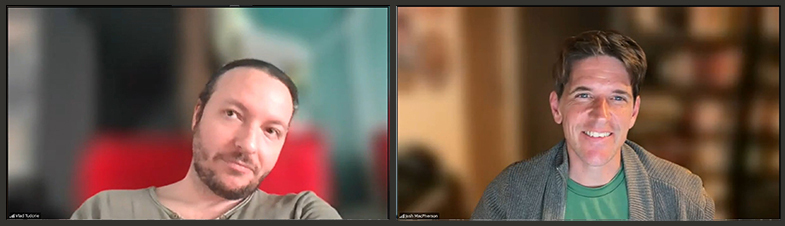
    When I sat down with Josh MacPherson, founder and education strategist from the US, based in Japan, I expected our conversation to orbit around product updates and content workflows. What unfolded instead was a wide-ranging and raw exploration of what it means to run a business while the world feels like it’s wobbling on its axis. From Tokyo to Bucharest to the US, we covered how business owners are making sense of the shifting ground beneath their feet and what it actually takes to build resilience when clarity is scarce.

    In this article, we’ll look at how smart leaders are staying grounded in global turbulence, balancing practical operations with long-term strategy, and building flexible systems to carry their teams and customers through whatever comes next.

    Thinking globally, acting personally

    Josh opened with a grounded sense of place: “Spring is nice in Japan, cherry blossoms are out, so it’s a kind of nice week for the kids and hanging out.” Amidst the macro chatter, this reminded me that for most of us, global events still hit home in very personal ways.

    We talked about navigating today’s world not just as business owners, but as parents, spouses, and global citizens. “It was a while it lasted, like we had a nice two generations’ worth of living in a free world.” That kind of quiet reflection hits differently when you’re also balancing product launches and content workflows.

    But far from doomscrolling, these reflections shape a more human business strategy one that considers the safety of your family, the mobility of your team, and even backup plans for where to relocate if the political winds shift too sharply.

    The best decisions often start at the dinner table.

    Strategic calm, not reactive panic

    When the world feels like it’s speeding up, the instinct is to sprint. But what Josh and I kept coming back to was the value of slowing down to plan.

    “We’re doing some refinancing and trying to put a little extra to the side… just in case.”

    That’s not just personal finance; it’s business strategy. Leaders today are proactively reducing exposure to risk by holding more cash, diversifying platforms, and shoring up operations before cracks widen.

    I shared how I recently took out a small business loan, not for growth, but to ensure breathing room. It’s not about waiting for the worst; it’s about building a bridge to cross whatever’s next.

    “You just don’t know the multiple layers of effects you create in these times.”  Josh said.

    Every decision has ripple effects, some we won’t notice until months down the line. That’s why it’s not about being perfect, it’s about being intentional and responsive.

    Information awareness is a leadership skill

    Josh and I both admitted to watching the news more than we used to, not for doom, but for pattern recognition. It’s part of our jobs now.

    We explored how the speed and volume of online information today can make it harder to distinguish between well-researched insights and cleverly disguised marketing or misinformation. “It always felt like it was trying to show the truth… and now it’s harder to tell what’s genuinely informative from what’s just persuasive.”

    Media literacy isn’t optional anymore. For business owners, especially those with international clients or teams, understanding information flows is mission-critical. What your team believes, what your customers fear, and what the market reacts to are shaped by stories. And not all stories are neutral.

    We don’t need to become conspiracy theorists. But we do need to become curious readers and critical listeners.

    The shift in consumer mindset

    As the world tilts into new forms of uncertainty, it’s not just business leaders who are adapting; customers are changing, too.

    Josh captured it clearly: “Most people aren’t traveling. Most people are kind of hoarding their money.”

    That statement points to something deeper. Customers today are more cautious, more selective, and more skeptical. They’re rethinking what’s essential, delaying purchases, and paying closer attention to how brands behave, not just what they sell.

    This shift affects everything from marketing and messaging to pricing strategies and product offers. It’s no longer just about meeting needs; it’s about showing empathy and creating real value in uncertain times.

    Understanding these subtle shifts in behaviour can help business owners adjust their tone, refine their offers, and stay relevant even when wallets are tighter and timelines are fuzzy.

    Keeping the long view

    We ended the chat not with a five-point plan for the apocalypse, but with a sense that the long game still matters.

    Josh said it best: “If things are too stable, then when they break, they break real bad… hopefully this next couple years of shock will stabilize in a different way, over time.”

    That’s the kind of thinking I admire: anti-fragile, not just resilient. It’s about building systems that get stronger through stress, not just ones that survive it. That implies a deliberate baking into the system of processes that improve the systems based on new learnings.

    This is very different from the lazy perspective business owners often employ, where they hope for a perfect and simple system that always works with no edge cases.

    When the world is full of noise, strong signals come from quiet confidence, deep focus, and thoughtful execution.

    Resilience is in the doing

    If there’s one thing I took from this conversation with Josh, it’s that resilience isn’t a trait. It’s not something you either have or don’t. It’s something you practice.

    Every time you update a workflow, audit a task list, check your finances, or question a headline, you’re building that muscle.

    And while we can’t predict what’s coming, we can choose how we prepare.

    Resilience shows up in quiet decisions: choosing clarity over chaos, staying focused on what you can control, and helping your team do the same. It shows up in your willingness to adapt your offers, stay connected to your market, and think globally while acting locally.

    It doesn’t require heroic speeches or all-or-nothing bets. It just asks you to show up, pay attention, and keep building, especially when it’s hard.

  • Why first aid knowledge saves lives (and why businesses should care)

    Why first aid knowledge saves lives (and why businesses should care)

    Helen Underwood is the founder of Underwood Training, a UK-based first aid education company with a mission to make life-saving knowledge accessible to everyone, not just professionals. Her background is in physiotherapy, having worked in pediatric intensive care and acute trauma units. After burning out from the emotional and physical toll of that work, Helen transitioned into sports coaching and later discovered her calling in first aid instruction.

    Underwood Training now offers both in-person and virtual courses, including a dedicated program for parents—driven by Helen’s firsthand experience helping a family save their infant’s life just days after she taught them CPR. Her work is as much about confidence and prevention as it is about quick response in emergencies.


    First aid is simply the help you give right when something goes wrong—whether it’s someone collapsing, getting hurt, or suddenly feeling unwell. It’s that immediate care anyone can provide before the professionals arrive. Sometimes it’s dramatic, like CPR. Other times, it’s helping with a cut, calming someone with a migraine, or just knowing what to do when someone falls. It’s not about being a medic—it’s about being ready.

    In the UK, workplace injuries are more common than most of us realize. Every year, thousands of employees are hurt on the job—many from completely preventable incidents like slips, trips, or falls. And while not every injury is life-threatening, even minor accidents can escalate quickly if no one knows what to do. That’s where basic first aid training comes in. When your team has the confidence and skills to respond, the whole workplace becomes safer.

    As a business consultant, I’ve had a front-row seat to many stories about strategy, growth, and transformation. But every so often, I hear something that shifts the conversation completely. That’s what happened when I sat down with Helen Underwood, founder of Underwood Training.

    What began as a casual call quickly turned into a profound reminder: sometimes, the most important investment a business can make has nothing to do with profits and everything to do with people.

    The life-saving power of basic training

    Helen’s path to first aid training began in pediatric intensive care. Burnout and health issues led her away from hospital wards, but not from her calling.

    “One of the things I’m really aware of is when I was working in intensive care… those people who’d had some initial first aid actually did an awful lot better than those who had no assistance. It can make such a big difference in decreasing the severity of the injury and the emotional trauma.”

    That insight became her mission: to equip everyday people with the skills to act fast and confidently when emergencies strike. And it’s not just theory. Her story about a friend’s newborn child needing CPR, days after she personally taught them, hit me hard.

    “They gave rescue breaths to their baby. She’s now in primary school… and every now and then I just think, what if I hadn’t gone round? Would she still be here?”

    That moment didn’t just change the parents – it changed Helen. And frankly, it changed me, too.

    Emergencies like strokes, heart attacks, or allergic reactions don’t come with a warning—and when they happen, speed is everything. Acting within the first 4-5 minutes, especially in the case of cardiac arrest, can more than double someone’s chance of survival. That’s why first aid isn’t just a nice-to-have—it’s a skill set that gives your team the clarity and confidence to step in before help arrives.

    In the UK, around 80% of cardiac arrests happen at home or in public spaces, not at work. Yet many employers train only the bare minimum of staff, just enough to meet legal requirements.

    “Why not offer every employee a virtual first aid course they can do in their own time? It might help them with their friends and family and communities as well, and actually, they would see that as the employer investing in them as a person.”

    That’s more than a smart suggestion. It’s a challenge to rethink what workplace training can mean.

    What struck me even more was Helen’s explanation of how fast and how simple intervention can be.

    “In the first four minutes after collapse, the most common thing blocking the airway is the tongue. If someone simply knows how to open the airway properly, they may not even need CPR. They could start breathing again right there.”

    Just knowing how to tilt a head and lift a chin can be enough to save a life.

    Helen also highlighted another common confusion: the difference between a heart attack and cardiac arrest. A heart attack is when the blood supply to the heart is blocked, but the person may still be conscious and breathing. Cardiac arrest, however, is when the heart stops pumping blood entirely, and that’s when CPR is critical.

    These aren’t just medical terms. They’re distinctions that anyone can and should understand.

    Gender bias and the hesitation to help

    One thing that truly surprised me in our talk was a harsh truth: women are statistically less likely to receive CPR from strangers.

    “If I collapse in the high street, I’m statistically less likely to receive CPR just because I’m born as gender female. That’s a real problem.”

    People freeze. They hesitate. And sometimes, that hesitation costs lives. Training doesn’t just teach techniques, it builds the confidence to act.

    And that lack of confidence is a barrier in more ways than one. Many people are afraid to intervene, not out of apathy but because they don’t feel qualified. Helen sees this all the time: people choosing inaction simply because they’re afraid of getting it wrong.

    The barriers to training and a way forward

    Despite legal requirements for first aiders in the workplace, many companies stick to the bare minimum. Helen shared how often large companies will only train the required number of people, not seeing the opportunity to go further.

    Worse still, she’s had people cancel on the morning of training because staff shortages made it “inconvenient” to attend. That lost opportunity can’t be reclaimed.

    Helen suggests that instead of treating training as an obligation, companies could use flexible formats, like her virtual course for parents, and offer it to all staff as a benefit. It builds community and can have ripple effects outside of work.

    During our conversation, I posed a question: What if there were tax breaks or incentives for businesses that go beyond the legal baseline?

    “Even if we could start with local government, it would be something. The NHS and schools are stretched, but incentives could create change without needing massive funding.”

    The idea isn’t just theoretical. Encouraging first aid knowledge through policy could reduce strain on emergency services and save lives long before help arrives.

    A practical call to action for business owners

    I’ve worked with companies of all sizes, and I know how often we think in terms of margins, KPIs, and compliance. But Helen’s work reminded me of something bigger:

    “Because if your lives touch others, literally, right, if they don’t get that aid, they can die or suffer potentially, you know, permanent trauma. There are very few occupations that can claim that.”

    In a world full of risks, mental health crises, unexpected accidents, or even just everyday slips and falls, having trained employees could be the difference between tragedy and triumph.

    Conclusion

    If there’s one insight that stayed with me, it’s this: first aid training isn’t just about emergencies, it’s about empowerment. Whether it’s knowing how to clear an airway in under four minutes, recognizing a poorly heart, or having the confidence to act without hesitation, these skills shift the odds when seconds matter.

    Helen’s stories show us that meaningful change can start with a conversation, a course, or even a quiet moment of preparation. As business leaders, we have the opportunity and responsibility to turn compliance into care and training into transformation.

  • Growth hacking is a mindset, not a tactic

    Growth hacking is a mindset, not a tactic

    In a digital world obsessed with tools, quick wins, and data dashboards, it’s easy to lose sight of what really fuels growth: mindset.

    That was the recurring theme in my recent conversation with Theodoros Moulos, Chief Strategist of  of Growth Hackers Inc. and CEO of GrowthRocks, who helped pioneer what we now call growth hacking. Theo’s journey into this space wasn’t linear—and that’s exactly what makes his perspective so valuable.

    From psychology to growth strategy

    “I believe it was just out of luck because when I started, it was very interesting, but I started psychology. Then I moved into computer science, then financials, and then I ended up with an MBA,” Theo shared. “All these four were not because I had a clear definition of what I was going to do in my life, but because I couldn’t decide what I liked best.”

    That exploration eventually crystallised into a unique ability to connect human behavior, numbers, and technology. For Theo, growth hacking wasn’t just a clever marketing strategy—it was a natural evolution of everything he’d studied.

    The birth of a movement

    As our conversation unfolded, we reflected on the rise of the term “growth hacking.” According to Theo, “If you will check Wikipedia or ChatGPT on who invented growth hackers and the term growth hacking, the first result that you will get is that it has been coined by Sean Ellis. Sean, was founded Growth Hackers many years back. At that exact time, we started GrowthRocks, which 10 years later invested in GrowthHackers.. So yes, I can actually say that we started the whole movement.”

    Article content

    But the real story wasn’t just about a term. It was about changing how marketing is done. Theo explained that growth hacking originally meant applying agile development principles to marketing. Why wait six months for a campaign to maybe work when you could test, learn, and iterate every week?

    “Back then, it was about clearly taking the agile procedure of developers and applying that agile procedure and project management into marketing,” Theo said. “Which for me it was a very nice idea because I thought, why marketing needed to run in waterfall? We used to spend months over months implementing something without knowing if that something would ever work.”

    It’s not about services. It’s about systems.

    One of Theo’s strongest critiques is about the fragmented way many businesses approach marketing today. “The problem with most companies today is that they run, they have an agency for their website, they have an agency for the SEO, they have another agency for the social media, and they have another agency for paid ads,” he said. “They can prove to you that they have done a great job, but at the end of the day, you’re not growing.”

    Theo believes true growth requires cross-functional thinking,multi-dimensional discipline and a unified approach: All digital services working together. “Marketing doesn’t run in Silos” he said. He also noted that many agencies just pitch what they know—regardless of whether it fits the client’s real goals. “If I am a paid ads expert, I’ll suggest ads. If I’m an SEO agency, I’ll suggest SEO. But that might not be what the client needs.”

    That resonated deeply with me. At Serenichron, we’ve always taken a holistic view of business development. From day one, we believed that marketing, tech, operations, and brand are all part of the same ecosystem. You can’t just fix one lever and expect the whole machine to run better. Like Theo, we’ve seen firsthand how disjointed strategies lead to stagnation while integrated thinking leads to momentum.

    A real growth strategy starts with understanding the business—its people, its context, and its constraints—not forcing a predefined solution.

    Not generalists, nor specialists: Multi-specialists also had a strong take on team building in the digital age. “It’s not time for a specialist; it’s time for multi-specialists,” he told me. Founders don’t just need experts—they need adaptable collaborators who can wear many hats. It reminded me of that internet-famous twist on an old saying: “Jack of all trades, master of none—but still better than a master of one.”

    This is especially relevant in fast-moving environments where business owners need to pivot quickly and make cross-disciplinary decisions.

    Community, product, and the next evolution

    That same mindset has powered the expansion of Theo’s ventures—from building Viral Loops (a referral marketing tool) to creating a 100,000-member community. But the real magic? They didn’t build those tools for the market—they built them for themselves first.

    They used them internally, refined them in real conditions, and only then turned them into sellable products. “We did that four times… We support the product from the inside out, then scale and sell.” It’s a compelling model: solve your own pain points, then help others solve theirs.

    Growth hacking goes corporate

    Even as Google search trends show a decline in the phrase “growth hacking,” the principles are being adopted by more mature businesses—often under different names like “growth marketing” or “product-led growth.”

    “We were very busy at the time implementing and running and growing. I believe that after the initial years, where we were making a lot of noise about growth hacking, then we stopped speaking about growth hacking at that time because we were busy implementing things,” Theo said. “But now we’re bringing the theory back. Even more, we evolve it and push to the next level”

    Big companies are now realizing they need to think—and act—like underdogs if they want to survive. “Even big companies need to act like underdogs… or their market will be overtaken by those who do.”

    If you’re working inside a corporation, I’d love to hear your take: is this the reality where you work, or is it still all smoke and mirrors?

    AI, adaptability, and the bleeding edge

    One of the most fascinating parts of our conversation was how growth hacking prepares people for what’s coming. Theo shared that the same traits that make someone a good growth hacker—broad knowledge, deep skill, fast iteration—are exactly what today’s AI-driven world demands.

    “Growth hackers have broad and deep expertise, and that’s what AI transformation requires.”

    In the age of AI, nothing stands still. New tools, new regulations, and new consumer behaviors emerge almost daily. Only those who can adapt, connect dots across disciplines, and experiment fearlessly will stay competitive. And that’s why the growth hacking mindset isn’t optional anymore—it’s essential.

    Final thought

    Growth hacking isn’t about chasing trends or checking off tactics—it’s about thinking differently. It’s the mindset of asking better questions, testing smarter, and aligning every part of your business to serve the real goal: sustainable, meaningful growth.

    At Serenichron, this is exactly the philosophy we live by. We’ve never believed in siloed solutions or copy-paste strategies. Every business is unique, and the strategy should be, too. That’s why we focus on a whole-business view—bringing tech, operations, branding, and growth into one unified system that evolves with your business, not against it.

    Whether you call it growth hacking, growth marketing, or product-led strategy, the future belongs to those who can see the whole system—and move fast within it.

    As Theo’s journey shows, this isn’t just a strategy. It’s a philosophy—and it’s just getting started.